'I only went out for a walk and finally concluded to stay out 'til sundown, for going out, I found was really going in.' John Muir

I've seen the top of Everest (from a long way off), smelled the breath of a whale (from way too close) and lived on a boat in Greece (for a few years), but I continue to experience some of my most precious moments right outside my backdoor.

If comments are proving difficult to do, please email me; sleepysparrow@yahoo.co.uk
Showing posts with label birds. Show all posts

Thursday, 30 April 2015

Early Morning Garden Party

'Get Uuuup Now, Get Uuuup now'. 
That's what a woodpigeon cooed outside my bedroom window this morning. I felt like turning over, but if I had I'd have missed these early morning garden treats...

Mr And Mrs Sparrow chewing the fat


A starling with lovely spots

A baby sparrow waiting to be fed


Blackbird taking a bath


This male sparrow sits here every morning, chirping for all he's worth to attract a mate, no luck so far.


Tulips still asleep


Wide awake primroses

Glowing rhubarb

Courgette seedlings

So thanks for waking me up wood pigeon.  I'm glad I didn't miss this early morning in my garden. It was a real treat for the senses and set me up for the day ahead.  
Take your morning cuppa outside for 10 minutes before you rush on with the day, you never know what you might see, hear, smell.


Thursday, 23 April 2015

Welcome Back Warblers!


'Willow warblers...are amazing little birds: so small, such courageous travellers, so sweet a voice, such fierce competitors. It is when you can hear the first willow warbler of the spring and know it for what it is that you have passed the point of no return.  You have finished and revelled in chapter three of Ulysses. You have become a birdlistner. You are committed. And once you have done that, you know a lifetime of pleasure lies before you. Once you have cracked the willow warbler, you're a goner.'

The above is a quote from Simon Barnes' wonderful book 'birdwatching with your eyes closed.'

Yesterday evening, we took a slow walk over the iron age hillfort and across Halkyn Common, laughing at lambs lounging in the late sun, gulping air filled with the lettucey taste of new grass.  We stopped abruptly, looked at each other, cocked our heads on one side and grinned; huge grins that spread across our faces until there was almost no room left.  There was no mistaking that sweet scale-tumbling song. The willow warblers are back safely from Africa.  

It didn't go unnoticed that this moment of joy came on a day of harrowing news reports of the plight of human migrants.


Monday, 13 April 2015

Springtime Slaughter

Just as I'm rejoicing at the first swallow and the arrival of my chiff-chaff and while I'm waiting for all the other birds to come back home and fill the woods with their song, I read this news on the BBC web page -

'Hunters win Malta bird referendum on shooting ban.
Malta has narrowly rejected proposals to ban controversial spring hunting, during which migrating birds are shot before they can breed.

There were jubilant scenes in the counting hall as the pro-hunt activists celebrated victory, which was achieved by only 2,200 votes.
The BBC's Mario Cacciottolo in a tweet says that hunters' association head Joe Perici Calascione is "ecstatic" about the outcome of the vote and has described hunting as an integral part of Maltese tradition.

Malta is the only EU country that allows recreational spring hunting.'

This particular 'tradition' allows for the shooting of turtle doves and quail, though who knows what other birds will be shot in the name of tradition?  Malta has a pretty bad track record and groups like Birdlife International and the RSPB have been working on the island for years to try and prevent the needless slaughter of many birds, including birds of prey and song birds on their way North.

I have heard turtle doves in Italy and their soft purring song is mesmerizing and calming, like a meditative chant.  They are dainty birds and a delight to listen to on a warm summer's evening.  They do exist in this country but mainly in the South and they are on the RED list, meaning they are globally threatened.
Now that hunters in Malta can legally shoot them in the spring time before they have had chance to breed, we are even less likely to hear them here.

It's a sad, sad day for man'kind'.

If you go to www.rspb.org.uk and look up turtle dove, you can hear a recording of their special song.


Thankfully this little sparrow is safe from Macho Maltese hunters.


Sunday, 12 April 2015

Reasons to be cheerful - Swallows and Rhubarb!

The swallows are back!  I look out for them arriving every year and I saw my first one this week, swooping through the dusky sky, no doubt relieved to have arrived safely.  It’s swapped red, African dirt for the green hills of Wales and right now it looks like a fair swap.  Lambs are springing like wind-up toys, cherry trees are frothy with blossom, the daffodils are bright suns shining along all the verges and the rest of the bird clan are cramming the air with their spring song.

The first birds of the season are always a delight.  When I open my back door on a chilly spring morning and hear that familiar ‘chiff-chaff, chiff-chaff,’ I break into a huge grin.  The tiny olive bird is the first of the warblers to return from Africa and soon there’ll be willow warblers, black caps, garden warblers and all the others.
And talking of ‘firsts’, this week we had the first of the rhubarb from the garden, lightly poached with a little red wine and brown sugar, delicious!


Go for a slow walk this weekend and see if you can spot a swallow - it's come a long, long way so give it a wave. 

And why not plant some rhubarb in a forgotten corner of your patch? You can just leave it to get on with the business of growing, which it will do effortlessly, and then give you juicy sticks to eat with ginger and ice cream.

To see the difference between swallows and house martins look on www.rspb.org.uk

Let me know if you see any!  Click on the blog title (Reasons to be cheerful) to bring up the comments box.  Or email me at sleepysparrow@yahoo.co.uk

Thursday, 26 June 2014

Wild World Cup

I walk to Coed y Felin to avoid the football, but even there there’s no escape.  I see leaping squirrels, more agile than any goal keeper and gangs of sparrows like noisy footy fans, rampage through the hazel hedges. A grey wagtail in its high viz jacket struts and flicks like a crowd marshal. A crow watches from the side lines, hunched and frowning, like Roy Hodgson.  Then a sparrowhawk makes a lunge at its pigeon goal just as a swift swoops in like Suarez, the pigeon escapes and the wren referee sounds its ear-splitting whistle.

So I go to the beach at Gronant where it’s wide and wild and I might see little terns.

I’m welcomed by a choir of skylarks. Their endless song is too sweet to be compared to a footy anthem.   I pass ponds that shelter newts and natter jack toads, swallows swoop over rippling grasses and I feel like Dorothy on the Yellow Brick Road as I follow the boardwalk towards the sea.  Pyramidal orchids glow either side of the boardwalk like the solar lights along my garden path and blue-grey sea holly is about to burst open, providing a sweet feast for red and black burnet moths. 
Then I hear the familiar high-pitched creaky chatter and I look up to see a little tern flapping jerkily above me, luminous and glowing in the white hot sun.  I love these little birds, they’re feisty for their size and with black zorro masks they seem to slice up the sky.  And they need to be feisty, during their short breeding season, they have to contend with crows, gulls, foxes and high tides.  The warden is out doing nest counts, he says they’re doing OK but there’s a kestrel around causing problems.

Today the tide is far out and the birds have a long way to go to find food.  I watch one fly back from the frothy sea with a tiny silver fish in its beak.  But distance is no problem for little terns; they fly 4000 miles from the West Coast of Africa to nest here every year. 

Escorted by creaking little terns, I make an epic journey of my own, all the way down to the sea to paddle. The sun burns my ears and the wind ruffles my hair and when I eventually arrive at the water’s edge, the shenanigans in Brazil seem far, far away....


Monday, 2 June 2014

No Place Like Home


Sometimes I need help to appreciate my own backyard.  Like Dorothy, it takes a journey over the rainbow and a few adventures before I remember ‘there’s no place like home’.
It’s good to be still after 4000 miles in the campervan.


I'm not the only one who's come home.Wading through bluebells at Coed y Felin I hear a pied fly-catcher.  I’m always startled at how they find their way from Africa to this small patch of Flintshire woodland.  A dapper male sings, 'tree-tree, once more I come to thee.' 
www.northwaleswildlifetrust.org.uk


While shopping for plants in Mold market, I hear swifts screaming overhead. Young swifts spend their first two or three years in constant flight.  I grin at them charging up and down the high street sky like a gang of teenagers. 
www.swift-conservation.org


I visit Moel Famau where
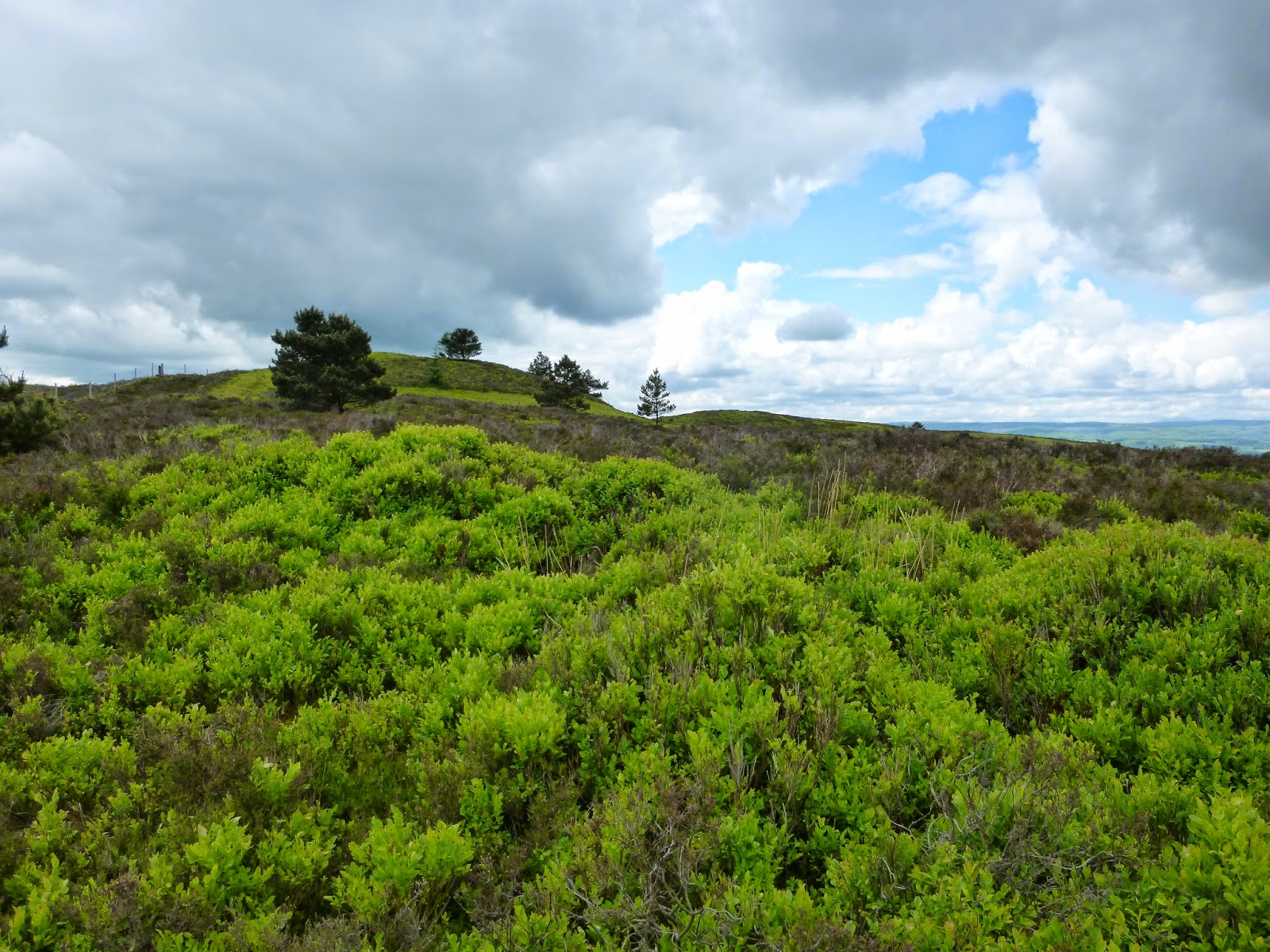
the call of a cuckoo fills the spaces between the clouds. People stop on the hill,tilt their heads to one side and smile. Skylarks sing high over acid green bilberry shrubs that promise a tongue-staining bounty in late summer. 


Drinking tea at the welcoming Shepherd's Hut, I watch small children tumble down the heathery hill as a willow warbler tumbles down the scales. 
www.shepherds-hut.com


At my Yoga class we do an invigorating sequence that involves firing an arrow and hurling a thunderbolt. It’s about aiming for goals and achieving them.

Right now my goal is to simply ‘BE’ and there’s no better place to be than at home in Flintshire.
Dru Yoga  www.druworldwide.com

Wednesday, 15 January 2014

A Tweet a day keeps the blues away


Music is returning to my garden. Birds are tuning up for spring.  I stick my head out of the back door into rain and wind and sky the colour of an oil-spill and hear the sweet, sharp sound of a dunnock, like two pieces of polystyrene being rubbed together, though the dunnocks’ song doesn’t make me wince, it makes me grin.  Great-tits are teacher-teacher-ing, robins softly trill, their sound as watery as the winter sun and great spotted woodpeckers pik- pik like squeaky toys.  My shoulders relax, my heart beat slows, my face muscles soften as I tilt my head in different directions to catch each song.

Blackbirds are back in numbers from wherever they’ve been hiding, though silent still.  They’re playing  three-a-side, dribbling apple pieces up and down the lawn. Starlings peck at past-their-sell-by-date mince pies, clicking and whistling like old men adjusting their hearing-aids . 

During a winter bird survey yesterday,we shocked two woodcocks into a zig-zag, wing-whirring, brown-blur flight and chuckled at the site of a moorhen in a tree.  There were also bullfinches, not the usual two or three but – what’s the collective noun for a group of bullfinches?  A ‘plump’ of bullfinches perhaps, or, if you own an apple orchard, a ‘pest’ of bullfinches?  Their soft, sad whistles gave them away.

Birds or, more particularly their songs, may be good for your health.  There’s an interesting article on the internet - http://www.bbc.co.uk/news/magazine-22298779 called Surprising Uses for Birdsong. Recordings of birdsong have been installed in the corridors of Alder Hey Children’s hospital in Liverpool.  Amsterdam’s Schiphol Airport uses birdsong in a quiet lounge where people can relax before their flight.  The National Trust suggests people listen to birdsong for a few minutes a day to combat low moods.  Radio Four’s Tweet of the Day is very popular.  If you don’t hear it at 05.58 each morning, you can download the podcast.  Or if like me, you can hardly wait for chiff-chaffs and willow warblers to arrive from Africa, go to the website and listen now!  http://www.bbc.co.uk/podcasts/series/totd


Tuesday, 7 January 2014

Have a Happy and Slow New Year


January can be a difficult month.  The Christmas decorations are back in their box and rooms are no longer filled with twinkling lights and glistening glitter.  The sky’s the colour of under-the-bed-fluff and the ground squelches beneath my yellow wellies.  Spring seems a long way off.
There must be something good about January... 

Well, it’s an ideal time to be ‘slow’. 

 
Snuggle up and read, read, read. Try a bit of poetry, I love Billy Collins.

Empty your veggie draw,open those tins of butter beans and chick peas you’ve had at the back of your cupboard for ages and make vats of nourishing soup to freeze - whilst listening to warming and passionate opera arias,(try Anna Netrebko and Rolando  Villazon singing ‘O Soave Fanciulla’ – bliss, you’ll find them on YouTube).
Keep some strings of fairy lights up throughout January and February.

Light lots of candles and sit and enjoy the sound of the rain beating hard against your windows.

Get cosy in your Christmas pyjamas and listen to a talking book.  I can download them for free from my library via One Click Digital and the Flintshire.gov web page.  For some extra warmth, choose a story set in a warm climate.
Visit a spa.  My nearest one at Deeside Leisure Centre offers two people, two hours in the spa for £15. Laying on my towel in the muscle warming sauna, I could be anywhere I choose.
Write letters to friends you haven’t seen for ages, send silly things, stickers, leaves, doodles on post-it notes in the envelope.  It’s great to receive a hand written letter through the post.
Plan an adventure.  I love to unfold my maps and spread them on the living room floor. I lay down beside them and trace routes with my finger.  This year I'm looking at cycling along The Loire, walking the Welsh Coastal Path - and then there's Rannoch Moor. Have you seen the O.S.map for that area? It's well worth lying on with your magnifying glass, wow!
Watch the birds.  This morning we had 6 black birds in the garden, eating chopped apples and having minor skirmishes.  I spied a plump, pink bullfinch pecking at buds in the tree opposite my window. A circus troupe of blue-tits came swinging and leaping from feeder to fat balls and a squabble of sparrows bullied for seed space.  January 25-26 is the time to join in the RSPB’s Big Garden Birdwatch.
 
Join an exercise class.  I love my local spinning class where we all perch on fixed bikes and pedal like the wind to disco music.  Clare's Dru Yoga class at Theatre Clwyd is wonderful on a dark and soggy January afternoon.  And there’s coffee and cake to be enjoyed afterwards in the cafe and lovely art to gaze at along the corridor galleries.
How will you make the most of this SLOW month?

Wednesday, 13 November 2013

BIRDSONG

Today I helped North East Wales Wildlife with a winter bird survey.  I used the RSPB website to brush up on some bird songs and calls before I went. I tried to make notes on the sounds so I’d remember them in the field, but how do you write down the sound of a bullfinch?  They whistle softly, a sort of wheeet, wheeet, wheeeeeeeeet.  How many ‘E’s is that?  And how do you spell the sound a goldcrest makes, or a flock of goldfinches?


Kim Atkinson paints birdsong.  She sits and listens for half an hour, makes notes and then paints what she’s heard.  Perhaps little dots for a skylark, short thick strokes for crows.  She’s made an art book with Noelle Griffiths which you can see on Youtube, or in the flesh if you visit the National Library of Wales in Aberystwyth.

I find relating the sounds to things helps me to remember them. Long tailed tits sound like tiny football rattles as they clatter overhead in their family flocks.  I can almost taste the sound of a great tit, 'teacher-teacher,' like a metallic filling in my mouth.  Goldfinches tinkle like the wind chimes on my birch tree.  A great spotted woodpecker sounds like someone has trodden on the edge of a squeaky dog toy.  The nuthatch sounds demented, like it’s forgotten where it’s hidden a nut and trying desperately to find it.

I love Simon Barnes’ description of a blackbird’s song from his book; Birdwatching with your eyes closed: ‘Blackbirds whistle.  They whistle almost like a man, leaning dreamily against the wall with his hands in his pockets, not too stressed about his next appointment.’
We did see a male bullfinch, glowing like an ember in a hawthorn tree but he stayed silent.  The golden-penny-leaves of birch trees trembled when long-tailed tits rattled through. And a movement from the corner of my eye turned out to be a tiny,round goldcrest hanging like a Christmas decoration in a tangle of brambles. We gasped with excitement.  I wonder if birds can identify humans by the sounds they make?  ‘Ah, judging from that sound, they’re obviously a flock of bird watchers.’  

Thursday, 18 July 2013

World Listening Day

Today is World Listening Day.  The talk on the radio is of 'acoustic ecology and of going on a 'sound walk.'  We should care more about the way the world sounds.  Those high powered hand driers in most public loos make a lot of people jittery apparently.  Some people like the satisfying clunk of a car door, there's even a man who loves the sound of cars driving over cattle grids so much that he's made a CD called 'Cattle Grids of Dartmoor.'

On may way to the dentist I notice how I tune out the traffic sounds and only respond and look to the sky when I hear a shock of screaming swifts, a dozen swirling over my head.  They'll leave soon.  I'll miss that stop-me-in-my-tracks-sound. 

In the dentist waiting room there's the ubiquitous and unwelcome radio, 'Sisters are Doing it for Themselves.'  I suppose it masks the sinister buzz of a machine coming from surgery number 1.

I visited Cemlyn Bay Sandwich Tern colony on Anglesey last week with Dad.  Now there's a sound to revel in.  A real wilderness noise. I lay on pebbles made round by battering seas, closed my eyes and let the harsh 'kirrik' cries of a couple of thousand nesting birds pierce my ear drums. 

Thursday, 13 June 2013

Kindergarten


I’m like a teacher on playground duty.  The garden is full of baby birds, squabbling, fluttering, squawking and pecking – at anything that might be food.  I’m on cat and magpie alert.  I need a whistle.

Baby sparrows hurtle - head first after their parents.   Fluttering their wings like crazy they crash land in the laurel with a great rustle of leaves. 

A baby blackbird with a punk hair-do and a stubby tail squats under the garden bench, his beady black eye darting all around.  He emits high-pitched squeaks, like an electronic gadget.


The clattering noise behind my chair turns out to be a pale yellow frog, making its way along to, who knows where?  We eye each other through the trellis.  We had a fibre-glass pond about 25 years ago, for a short time, perhaps the frog remembers it?  I can hear it jumping across sacks of compost and old flowerpots.


There are baby plants in the garden too- feathery carrot seedlings, tiny velvet apples forming, clematis buds about to burst and lots and lots of nasturtium seedlings in places I didn't put them.


Birds are very vulnerable when they bathe.  So I am honoured when a blackbird bathes about three feet away from where I’m sitting.  Pearly drops of water roll off his black feathers and the yellow ring around his eye is the same yellow as the Welsh poppies growing in the gravel path.  We know each other well, this blackbird and me.  I cut up apples for him, he sings when I need it most.

Friday, 10 May 2013

Tales of a Rhydymwyn Riverbank


Last week, on a rare warm spring day, I joined Kate from North East Wales Wildlife on her regular otter survey route, past banks of pale yellow primroses and delicate violets.  The smell of wild garlic caused us to wrinkle our noses and talk about making wild garlic pesto sauce as the River Alyn murmured gently in the background.


Kate stopped and peered through her binoculars, ‘There’s some spraint,’ she pointed at an oily splodge on a prominent rock on the edge of the river.  We crouched over it and saw that it was full of white specks, ‘Frog leg bones,’ said Kate.  Of course we had to sniff the splodge, there’s a lot of speculation about the smell of otter poo.  Some say it’s like jasmine tea, others that it’s fishy or even like freshly mown hay, anyway, we agreed it’s not as unpleasant as it looks.  And more importantly, it meant there were otters here.  We spotted more and more spraint further along the river and then, even more exciting, paw prints in the silty mud


It was an idyllic spot on such a day, open meadow, slow meandering river, wild flowers, buzzards mewing, a woodpecker beating a frantic rhythm on a nearby dead tree.  Suddenly, we flinched at a sharp ‘peep’ and saw a blue blur as a kingfisher zipped past us.  It was tempting to take our shoes and socks off and paddle, but we were meant to be looking for otters. 
In fact, the cameras set up by NEW Wildlife have already picked up an otter and two cubs, we wanted to check if they were still around so were keen on finding fresh spraint.  The paw prints were certainly fresh and we imagined the otters scampering and playing over the many new branches fallen after the heavy April snows.  We were willing an otter to appear and kept our eyes peeled amongst the dark places under the overhanging bank and in the tangle of willow roots but we knew it was very unlikely. 
We agreed that just knowing they were around was enough.

Sunday, 17 February 2013

Up with the lark

The wind’s from Siberia, slicing through the crystal clear sky like an ice axe.  We’re up on Halkyn Common, Snowdonia on our left, The Dee far below on our right. I hear a faint song, like a thumb being drawn continuously over the teeth of a metal comb - not a dunnock, not a robin. Pulling my fleece hat off my right ear, I angle my head away from the whistling wind and look up.  Finally I spot a black dot way up high, just in front of the tissue paper moon, underlined by an EasyJet vapour trail, my first skylark of the year.  He pours down his song, never pausing for breath. 
It's only February, he won’t breed until April but he’s making sure he gets the best territory– the birdie equivalent of spreading his towel on a sun lounger before breakfast.

There's a ‘gulp’ of magpies clattering in a scrawny hawthorn.  I pity the ground nesting lark, though I once walked past a skylark’s nest everyday for a month and never knew it was there until someone showed me.  They’re very good at leading you away from their chicks.  Can they fool the magpies though?

Wednesday, 6 February 2013

Slow Saturday

I live near Mold.  It’s a ‘Slow Town’.  So I decide to do something ‘slow’.
I phone my friend. ‘How do you fancy a walk followed by coffee and homemade cakes?’   
‘Count me in,’ my friend’s a big cake fan.
We head for the village of Cilcain where every Saturday afternoon there’s a community café in the village hall. (www.cilcaintoday.org.uk)
 If there’s one thing I like as much as homemade cakes, it’s second hand books.  On the way in to the village hall, there’s a table piled high with them, impossible to pass.  After a leisurely browse, I select a book about mosaics and my friend finds one about Shackleton’s epic voyage.  We put our money in the honesty box and follow the tinkling sound of teaspoons on china. 
The hall is laid out with half a dozen gingham covered tables. My eyes come out on stalks as we approach the huge serving hatch and I take far too long choosing a cake. A queue builds up behind me but everyone understands my dilemma and waits patiently whilst I chose from chocolate, lemon, apple, fruit, brownie or flapjack. 
The café has a different theme each week.  Today there are crafts made by local people.  I chat to a woman who makes fabulous notebooks, cufflinks, earrings, cards, and art work from old newspapers and books.  ‘Everyone calls me the newspaper lady,’ she laughs, ‘people have started bringing me foreign newspapers and old menus from their holidays.’   I buy a beautiful blue-washed bookmark. You’d never guess it was made from old newspapers. 
On our way home along the quiet lanes I hear a familiar sound but one I haven’t heard for ages and I just can’t place it.  ‘What is that?  It’s like one of those swannee whistles that clowns blow when their trousers fall down.’ I hear it again and shout ‘Lapwing!’  We look over the hedge into a flooded field and see six.  I raise my binoculars, which have been around my neck all through coffee and cake.  Not a good idea.  I clean off the crumbs and look again.  There’s something about the cry of a lapwing which stirs the heart and makes me think of the wild moors and far off places yet here they are, on my walk home, taking advantage of the soggy field to probe for worms and insects.  Two take to the air, flapping their broad black and white wings and repeating that funny pee-wit call. 
A couple of lanes further on something zooms out of the wood just ahead of us, ‘Woodcock,’ we both shout together.  It zigzaggs up the field towards another bit of wood, its long bill pointing the way.
Red streaks appear in the darkening sky as we approach home.  ‘I could get to like this,’ my friend beams, ‘let me know if you plan any more slow outings.’

Sunday, 13 January 2013

Top Secret Birds!

At the end of my road there’s a strange collection of old brick buildings, paths covered with a now peeling anti-spark coating,  an old railway siding and some deep underground tunnels.   It was once a top secret WW2 chemical weapons factory and the tunnels held thousands of mustard gas shells.  They also carried out research into the first atomic bomb here.  Calculations and scribblings can still be seen on the walls in some of the buildings.  But now it's a thriving nature reserve and home to North East Wales Wildlife and Rhydymwyn Valley History Society.

I was on site to help out with a winter bird survey.  It was freezing , the golden reeds were covered in frost, the trees stood out like pencil sketches against a pale, water-colour-wash sky and my breath billowed out in clouds through my red felt scarf.

Jackdaws repeated their harsh calls like the sound of ice cracking; we counted their black shapes in the spooky ash tree.      On hearing a bright tinkling sound we looked up and counted ‘1, 2, 3, 4………10 goldfinches.’  We watched them disappear, showing off their light, bouncy flight.  Blue-tit, coal-tit, robin, wren, dunnock, marsh tit at the feeders in front of the bird hide, fieldfares clattering overhead, we counted them all until it was time for lunch and much needed hot chocolate.

After lunch we walked the Woodland Trail.  It was slightly warmer up there, less frost.  The branches glittered with drops of moisture and our feet slithered on dark slimy leaves.  The air was heavy, still and silent except for a drip-dripping sound and the occasional crunch of twigs under foot.   Then we heard a noise like tiny football rattles and saw a troupe of long-tailed tits swinging through the branches.   Then, the ‘demented’ call of a nuthatch, the thin ‘tsee’ of a goldcrest high in a conifer and the ‘squeaky toy’ sound of a great-spotted woodpecker.   Someone whispered, ‘There’s a treecreeper,’ and we all looked up to see the tiny bird, doing exactly what it says on the tin.

‘Woodcock!’ We shouted, looking at each other for confirmation that we hadn’t been imagining it. 
  It was on the edge of the Woodland Trail hiding in the leaf litter, until we approached with our clip boards.  I had a quick glimpse of its stocky body and long dagger bill before it disappeared. 

Kate pointed out some King Alfred’s Cake fungus, hard, oval and shiny black, growing on the bark of a dead tree.  She told us how it can be used to light a fire.  I never knew that.  I also never knew that I could see woodcock just down the road from my house.  I always imagined I’d have to get in the car and drive to a deep, dark wood somewhere miles away. 
Oh and there was also a ‘possible snipe’ near the wetland, but that flew off so quickly that none of us could be 100% sure.  

The next winter bird survey is on Saturday 26th January. I’m going to do my best to be there.  Who knows, we might see a ‘definite snipe’ this time?

Monday, 19 November 2012

Smelly Birds

According to the Rare Bird Alert web site, there are 1000 waxwings in Kyle of Lochalsh, an American Buff-Bellied Pipit in County Down, a Lesser Yellowlegs in Lancashire and Long-Billed Dowitchers in Gloucestershire.

I think I should report that there are 15 cocky sparrows on my bird feeder, 6 gaudy goldfinches squabbling over nyjer seed, 3 blackbirds dribbling a piece of apple across the lawn.

Today the frost is harsh and I scatter seed and best-cake crumbs with frivolous abandon.

To wake up my writing brain, I sometimes play the senses game - name at least 5 sights, sounds, smells, touches and tastes as quick as I can.  But today I struggled with smell.  No matter how hard I sniff, it's difficult to catch the scent of things when they're wrapped in ice.

If birds had smells..........a blackbird would smell of damp earth, sparrows would smell of toast, goldfinches would smell of Tutti-fruiti, like Opal Fruits - strawberry, lemon, lime.  Chaffinches would smell like just-dug-up potatoes and robins like Christmas tangerines.